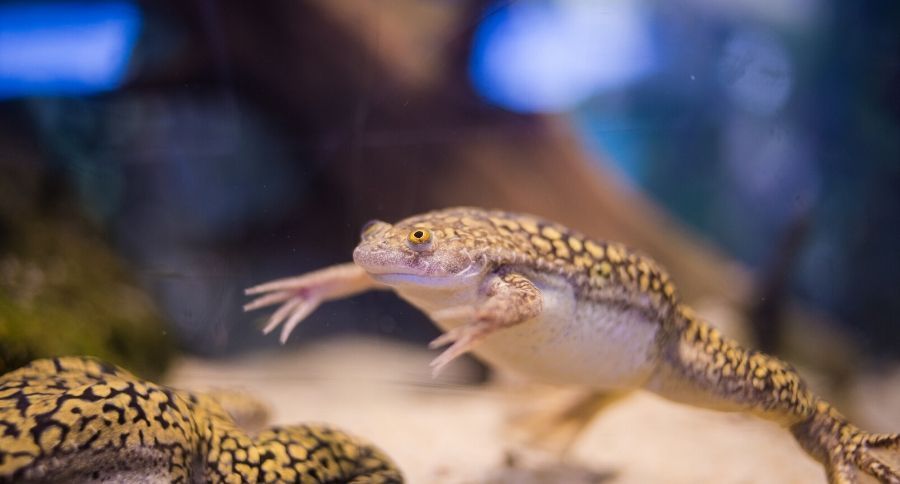
Before you read this and get all excited about this pet frog species, African clawed frogs are on California's restricted animal's list and cannot be imported, transported, or possessed without a permit. There are also several other states that don't allow pet owners to care for this frog species.
With that in mind, here are a few facts you must know about this frog given they're regulated in several states! This is really important information shared by the California Department of Fish and Wildlife.
All of this was reported on their Website.
- As a result of these feeding behaviors, African clawed frogs prey upon and out-compete native frogs and other aquatic species. In addition, they serve as a vector for parasites and diseases that can be transmitted to native frogs.
- African clawed frogs are a known carrier of chytrid fungus, which causes the potentially fatal skin disease in frogs called chytridiomycosis. Chytridomycosis is believed to be a leading cause of the decline of native amphibian populations all over the world and responsible for the extinction of over 100 species since the 1970s.
- African clawed frogs also secrete skin toxins that may be harmful to predators, including native fish and other aquatic species.
African clawed frog breed facts
In the wild, African clawed frogs have voracious appetites and will eat anything they can catch, whether dead or alive, including aquatic invertebrates, frogs, fish, and birds, as well as their own tadpoles and recent metamorphs.
These African clawed frogs are very easy to care for and live a long time. They get their name from both the three claws on their hind feet which are used to tear food apart. They're so cute!
They can grow up to 5 inches in length and can live 12 to 20 years. This frog is a yellow and gray color and they're aquatic. Their flattened bodies allow them to swim swiftly through the water.
They're a popular pet and live a long time!
Behavior and handling
They are considered pests in some places and used frequently for laboratory testing.
The African clawed frogs are known to be very hardy and can survive in some cold climates that most frogs wouldn't survive in. They're also known to eat the young of other frogs!
Feeding African clawed frogs is rarely an issue. Their diet includes tropical fish food, small crickets, earthworms, and small guppies. Any uneaten food should be removed from the cage to maintain the water quality.
Housing
Reptiles Magazine shares the basic housing requirements. This is an easy frog to take care of!
"African clawed frogs do very well in a 10 or 20 gallon aquarium. Fresh spring water or dechlorinated tap water (not distilled water) is recommended. The water should be filtered. Although not as visually pleasing, a bare cage bottom works well when keeping these animals. If gravel is used, make sure it is too large for the frogs to ingest during feeding."
Given they're a larger frog at about 4 to 5 inches long they do need space. You should also use a gravel substrate and you'll need a tight lid as they can jump out of their housing rather easily.
Spruce Pets tells us that these African clawed frogs don't need a land area.
"While African clawed frogs do not need a land area, the water should only be about 12 inches deep so that the frog will be able to easily reach the surface, since they must breathe oxygen (a minimum of 6 inches is recommended to allow the frog room to maneuver)."
Common health issues
African clawed frogs can be very sensitive to the toxic effects of metal ions in the water, so ensure that the water you use also does not come in contact with metal.
A proper diet and optimal water quality is key to keeping your frog healthy. They are known to be quite resilient and long-lived. Reptiles Magazine tells owners they need to understand what 'normal' behavior looks like!
"The best prevention for common health problems is to know your frogs' normal behaviors. Inspect them daily, and look for any abnormalities, such as cloudy eyes, cottony tufts of fungus, excessive shedding or sloughing of the skin, abnormal abdomen or leg swelling, cuts or abrasions, abnormal swimming or buoyancy, and changes in feeding habits."
Other fun facts about this frog species:
- African clawed frogs also have a lateral line system that is very sensitive to vibrations, enabling them to detect predators and prey in murky water.
- Their common name is the African clawed frog and their scientific name is Xenopus laevis.
- These frogs are aquatic frogs with small, wedge-shaped heads and flattened bodies.
- African clawed frogs have become established in watersheds throughout southern California.
- They are native to eastern and southern Africa and parts of western Africa. They have been used extensively used for research, and are considered an invasive species on four continents, due to their release into the wild from research laboratories.
- These frogs are plentiful in ponds and rivers within the south-eastern portion of Sub-Saharan Africa.
- The African clawed frog was imported around the world for its use in pregnancy tests.
- A few years ago, The University of California conducted a study that showed chytrid fungus infections were wiping out amphibians around the world, including hundreds of frog and salamander species. The fungus was linked to the African clawed frog.
- Feral populations of African clawed frogs outside their original distribution were first documented in the 1960s.
- This frog species are predominantly aquatic frogs with a preference for slow-moving water bodies.
- In the United States, African clawed frog populations have been reported in 11 states, including Arizona, California, Colorado, Florida, Louisiana, Nevada, New Mexico, North Carolina, Virginia, Wisconsin, and Wyoming.
Do you or anyone you know, live with exotic pets? Please comment below!
WATCH NOW: Bengal Cats Are Like Mini Leopards
Love reading about pets?
Don't miss a story! Sign up for daily stories delivered to your inbox.