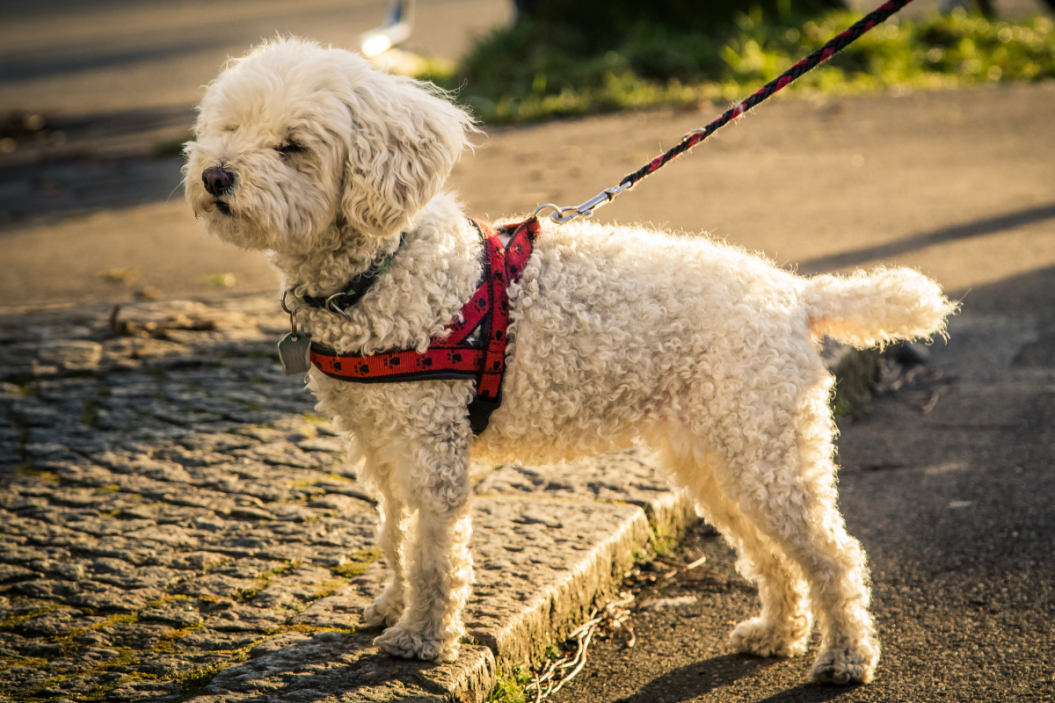
Whether you're walking your dog or he's walking you, keeping him fit starts with daily strolls. Taking your dog on a walk might not seem like the most enticing activity, especially if you're faced with constant pulling or a sluggish pace. Still, daily walks help keep dogs happy, healthy, and mentally stimulated. When it comes down to the tools of the trade, you've got a dog harness vs. collar to choose from.
There are endless options of harnesses and collars on the market, so every dog owner should be able to find something perfect for their pooch. But which is better: a harness or a collar? These dog-walking tools each have their own set of pros and cons, so the answer depends on you and your pup's personal needs. (There's also nothing wrong with keeping one of each around!) Here's everything you need to know to find the perfect harness or collar for your dog.
Pros of Dog Harnesses


Dog harnesses fit around your dog's neck and chest, equally distributing the force from the leash if they tend to pull. If you are not sure how to choose a harness, take your dog's measurements of their chest and neck, which should give you an idea of what size your dog will need. Your dog's front legs will go into the harness, and it will buckle around their chest. There are multiple types that come in both front clip harnesses and back-clip harnesses; no-pull harnesses will have a D-ring as the leash attachment.
Some of the benefits of dog harnesses are:

- Better control of a large dog while walking
- Protects the dog's trachea if they pull hard on the leash
- Stop escape artists from slipping their collars
- Keeps the leash from getting between the dog's legs
- Helps puppies learn proper leash-walking
- Front-clip harnesses limit pulling
- Easier on older dogs that need spinal support
- Prevents injury in small dogs
- Better fit for brachycephalic breeds, like pugs and French bulldogs
Cons of Dog Harnesses
While there are many pros to using a dog harness, there are a few cons as well. Consider the following when deciding to use a harness:
- It may be more difficult to use with giant dog breeds
- If the harness does not fit properly on your dog's body, they can escape
- Harnesses can be bulky and hot in warmer weather
- Back-clip harnesses may encourage a dog to pull, defeating the purpose of not using a collar
- There is not a place for your dog's identification tags on most harnesses
- Harnesses that are too tight can be physically painful for your pup
Pros of Dog Collars

RELATED: Take Your Tiny Dog on a Walk With These Small Dog Harnesses
Dog collars are the more traditional option for your dog and there are many different types to choose from. Some, like prong collars and slip collars, are used as training tools. Others are more decorative and function to keep your dog's tags handy at all times. Then there are martingale collars, which provide the benefit of control without the choking hazard of a slip collar. Overall, the most common kind of collar is a flat collar. Here are the benefits:
- Natural spot for ID tags and rabies tag
- Collars do not need a lot of strength to control your dog
- Collars are good for beginning dog training
- Most dog trainers recommend starting leash training with a flat collar
- Collars are easy to put on and can be swapped out seasonally
Cons of Dog Collars
Collars may be easier to put on, but they still have some cons. Some of the downsides to collars are:
- Not safe for dogs with respiratory problems
- Can cause neck injuries
- Dogs with small heads like whippets and greyhounds can easily slip collars.
- Not comfortable for dogs with back pain and other injuries
- Too tight of a collar can cause pain, but too loose and your dog can escape
If your dog is not responding well to a harness or a collar, you can also use a halter or head collar. These gentle leaders are best for puppy training and getting dogs used to having something on their faces and necks.
Do you use a harness or a collar for your dog? Tell us on our Wide Open Pets Facebook page!
READ MORE: Glow in the Dark Dog Collars Are the Best Way To See (and Be Seen) On Evening Walks
Love reading about pets?
Don't miss a story! Sign up for daily stories delivered to your inbox.