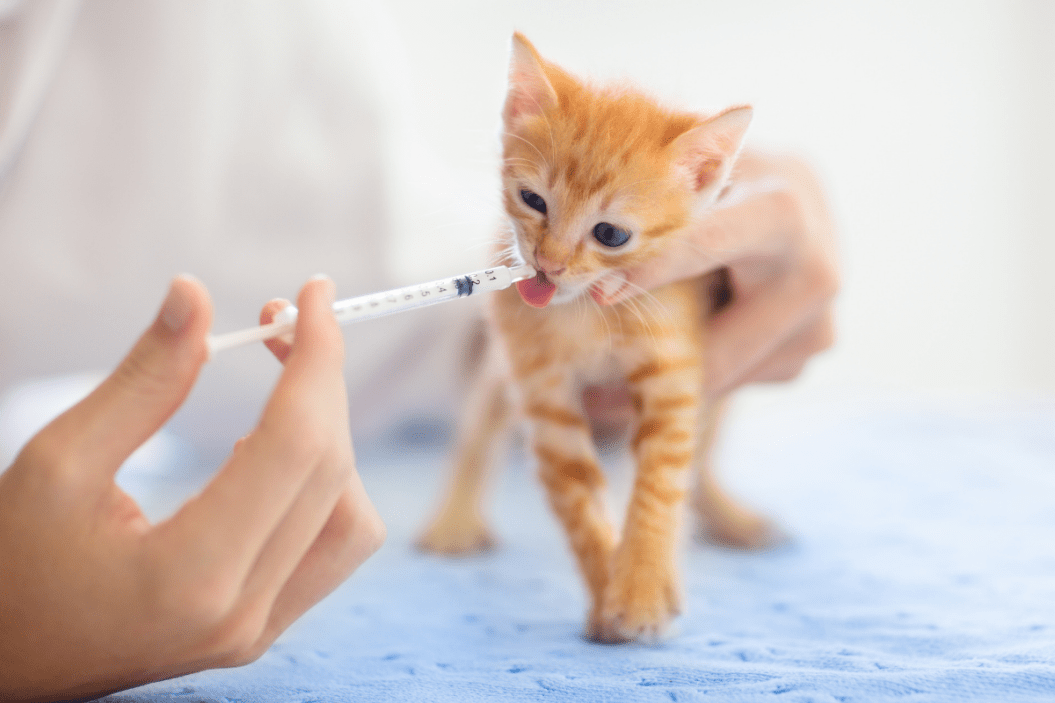
Becoming the parent of a kitten brings endless joy, as well as a lot of work. There's so much to do: You have to kitten-proof your home, practice litter box training, and even socialize your kitten. But one of the biggest responsibilities is keeping your new pet healthy through annual checkups and vaccines. It doesn't matter if you're the parent of an indoor or outdoor cat; sticking to a kitten vaccine schedule is essential to protecting your kitten as they grow.
Although kittens are born with some natural immunity thanks to their mothers' milk, vaccines are needed to give your feline friend complete protection from potentially fatal diseases. Some kitten vaccines are optional, like FeLV, while others, like rabies, are mandatory. By following a vet-approved vaccine schedule, you ensure your cat gets the right treatment at the right time and prevent over-vaccinating, which can be harmful to your pet. So, schedule an appointment with your vet ASAP and be sure to keep up with the recommended kitten vaccine schedule.
Understanding Kitten Vaccines


RELATED: Is Your Cat Just Fat, or Is There a Reason Behind That Saggy Belly?
Your kitten's first round of vaccinations should be administered around six weeks of age. By this time, most kittens have switched to dry food at this time and the antibodies from their mother's milk will no longer interfere with the vaccine's effectiveness. According to the American Association of Feline Practitioners, these are the diseases prevented by the recommended core and non-core vaccines for cats:
- Chlamydophila Felis: Chlamydophila is a bacterial pathogen that causes ??conjunctivitis, and may also lead to upper respiratory tract disease. It is transmitted when an infected cat has direct or close contact with another feline. Symptoms include thick, yellow or green discharge from the eye, loss of appetite, fever, sneezing, and nasal discharge. This is a non-core vaccine, but your vet may strongly recommend it if your cat is regularly around other cats, whether that's at home or day care.
- Feline Bordetellosis: Bordetella is a highly contagious respiratory disease caused by bacteria. It is mainly transmitted through direct contact with an infected cat or dog, though it can also be spread through the air. Symptoms include sneezing, coughing, and nasal discharge. In more severe cases, your cat may experience loss of appetite, fever, and lack of energy. In most cases, this is a mild disease that lasts seven to 10 days, but more severe infections could lead to pneumonia. Although this is a non-core vaccine, your vet may strongly recommend it if your cat is regularly around other cats or was adopted from a shelter.
- Feline Calicivirus: Calicivirus is a highly contagious disease that results in respiratory and oral problems. The virus is spread through saliva, sneezes, nasal discharge, or eye secretion. If the virus causes respiratory issues, you will likely notice sneezing, nasal congestion, conjunctivitis, and yellow discharge. Symptoms of oral problems may include those previously mentioned, as well as excessive drooling and ulcers on the tongue, gums, lips, or nose. A cat who became infected with calicivirus can be contagious for up to three weeks, so getting this core vaccine is crucial.
- Feline Immunodeficiency Virus (FIV): Also known as FIV, feline immunodeficiency virus attacks and weakens the immune system, meaning recovery from a normal infarction may become prolonged or chronic. Because of this, the symptoms are usually not a direct effect of the virus, but rather the secondary infection. Your cat can become infected with FIV if the saliva or blood of an infected cat gets into their system. There is no cure for FIV, but that does not necessarily mean it's fatal to your cat. It does, however, mean your cat should have limited, if any, interactions with other cats to prevent the risk of spread.
- Feline Leukemia Virus: Feline leukemia virus (FeLV) can cause cancer, blood disorders, and weakened immune systems. The virus lives in the saliva, nasal secretions, urine, feces, and milk of infected cats, and may be transferred from a bite wound, during mutual grooming, and from an infected mother cat to her kittens. Although your cat may not experience symptoms initially, their health may progressively deteriorate over time.
- Feline Panleukopenia: Once the leading cause of death in cats, feline panleukopenia (FP) infects and kills white blood cells, which play a major role in defending against infectious diseases. The virus is transferred when a non-infected cat comes into contact with the urine, feces, or nasal discharge of an infected cat. This can happen through direct contact or by sharing feeding bowls or litter boxes. Some of the early signs of infection include loss of appetite, high fever, lethargy, vomiting, severe diarrhea, and nasal discharge. The disease is fatal for kittens under 8 weeks old and treatment is intense, so prevention in the form of vaccination is key.
- Feline Viral Rhinotracheitis: Also known as Herpesvirus infection, feline viral rhinotracheitis (FVR) is the most common cause of conjunctivitis and a major cause of upper respiratory disease in cats. A cat can become infected if they come into direct contact with the virus particles, which like in the saliva, eye discharge, and nasal discharge. A newly infected cat will start to show symptoms two to five days after being infected. Some symptoms may include sneezing, excessive eye blinking and squinting, yellow, or green discharge, fever, lethargy, and loss of appetite. There is no cure for FVR, but vets can treat the symptoms.
- Rabies: Rabies is a fatal virus that's contracted through the bite of another infected animal. It attacks the central nervous system and can cause fever, difficulty swallowing, seizures, excessive drooling, paralysis, and eventually death. Cats have to be bitten by another rabid animal to contract the disease. There is no treatment for rabies.
Kitten Vaccine Schedule

Vaccination schedules may vary depending on your cat's breed and size, as well as additional procedures that may be required. The FVRCP vaccine, a combination vaccine that covers feline viral rhinotracheitis, feline calicivirus, feline panleukopenia, is typically given in a series beginning at 6 to 8 weeks of age. Follow up doses occur every 2 to 4 weeks until they are 17 weeks of age, with a booster given 1 year after the initial vaccination and then every 3 years after that. The rabies vaccine is initially administered at 16 weeks, with a booster given either every year or every three years, depending on local laws. You should avoid exposing your kitten to unknown animals until the initial vaccination series is complete.
Below is an example of what a kitten vaccine schedule might look like, based on AAFP recommendations.
6 to 8 Weeks:
Core: FVRCP vaccine (feline viral rhinotracheitis, feline calicivirus, feline panleukopenia)
Non-core: FeLV (feline leukemia virus), Bordetella
9 to 11 Weeks:
Core: FVRCP
Non-core: FeLV, FIV (feline immunodeficiency virus), Chlamydophila felis
12 - 14 Weeks:
Core: FVRCP
Non-core: FeLV, FIV, Chlamydophila felis
15 to 17 Weeks:
Core: FVRCP, Rabies
Non-core: FeLV
1 Year:
Core: FVRCP, Rabies
Non-Core: FeLV, FIV
Once Every 1 to 3 Years:
Core: FVRCP, Rabies
If Exposed/High Risk:
Non-core: Bordetella, Chlamydophila felis
When it comes to the rabies vaccine, check with your local laws to see if your cat needs the shot every year or once every three years.
Vaccination Risks


As with anything, feline vaccinations are not without risks. Usually, kittens are lethargic right after their vaccinations and may have tenderness and slight swelling at the injection site. Kittens can also have an elevated temperature and less of an appetite. Those side effects are temporary and will go away within a couple of days. Some cats, however, can have allergic reactions to the vaccine. Although a bad reaction is highly unlikely, if your kitten has any of the following serious vaccination reactions after their initial shot or booster, take them to the vet immediately:

- Vomiting
- Diarrhea
- Facial swelling
- Hives
- Difficulty breathing
According to The Cornell Feline Health Center, a very small percentage of cats develop a feline injection-site sarcoma. These nodules are very rare and need to be looked at by your vet if they have lasted for over three weeks. Vets believe that these tumors are a result of inflammation, and can appear up to ten years after the vaccination. If a tumor occurs, the vet will remove it. Sometimes cats will get small lumps at the injection site, but those generally will go away. Just keep an eye on it until it fully dissipates.
Looking for more cat medical information? Follow us on our Wide Open Pets Facebook page.
READ MORE: What Happens If Kittens Leave Their Mom Too Early?
Love reading about pets?
Don't miss a story! Sign up for daily stories delivered to your inbox.