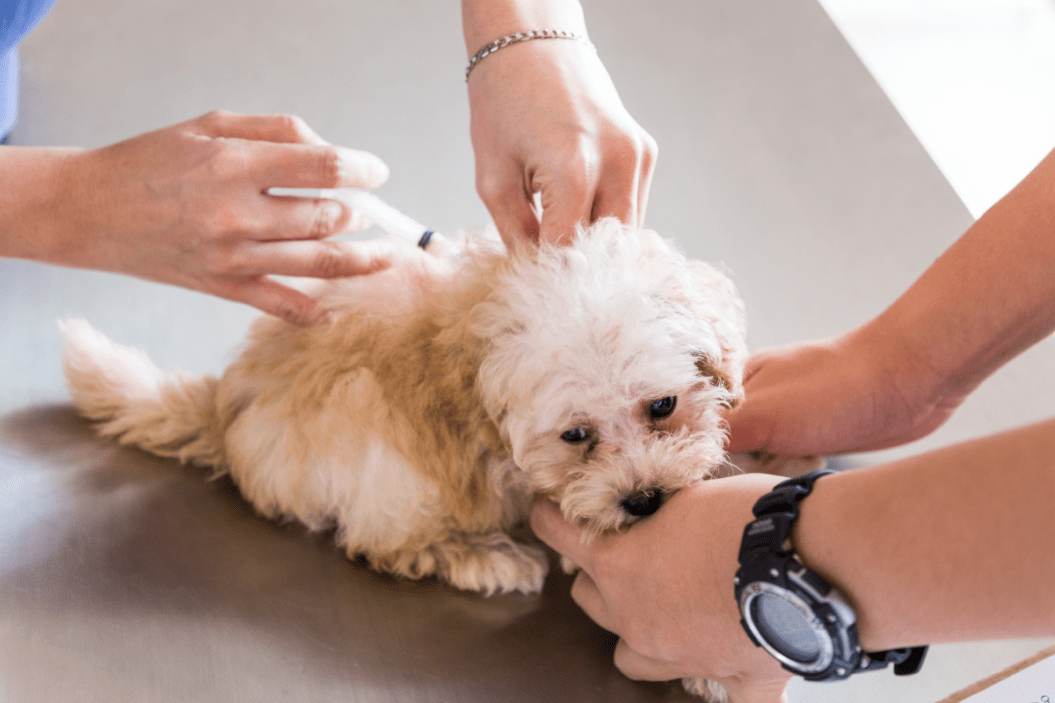
Becoming a dog owner is a big responsibility. Your four-legged floof will depend on you for everything, now and for the rest of their life. While you may be eager to get to the fun stuff, like going hiking or giving your puppy a bath, there are a few things that need to be taken care of first. After you've puppy-proofed your house and purchased everything on your new puppy checklist, it's important to follow the proper puppy vaccine schedule.
Much like babies, new puppies are totally defenseless. Because they typically nurse until they leave their mother, puppies do have some antibodies that pass from her to them--but this protection for their immune systems doesn't last long. Once a puppy switches to puppy food, they begin to lose their mother's antibodies and need help developing some of their own. That's where puppy vaccines come in.
Puppy vaccinations prevent illnesses your pet can pick up from other dogs, insects, wildlife, and parasites. Most of these core vaccines will offer complete protection for your dog once the full series is administered and are maintained through booster shots. Some puppy vaccines are optional, like the Lyme disease and rattlesnake vaccinations, while others, like the DHPP and rabies vaccines, are strongly recommended or required for all dogs. Schedule an appointment with your vet and be sure to keep up with the puppy vaccine schedule that will keep your new pet safe.
Understanding Puppy Vaccines


Your puppy's first vaccines should be administered around six weeks of age, typically before you even take them home. Most puppies are already transitioning to dry food by this point. It is important to wait until they're fully weaned, because the mother's antibodies can affect how much protection a puppy gets from a vaccine. According to the American Animal Hospital Association, these are the diseases prevented by the recommended core and non-core vaccines for dogs:

- Canine Distemper: Distemper has no cure, so the best treatment is prevention. This disease affects a dog's nervous, respiratory, and gastrointestinal systems. It can be transmitted in two ways: through the air by coughing or sneezing, or by sharing water or food with an infected pet or animal. Symptoms include diarrhea, vomiting, fever, coughing, seizures, twitching, paralysis, and in some cases, death.
- Canine Adenovirus: Infectious adenovirus, also known as hepatitis, is a very contagious virus spread through feces, saliva, nasal discharge, and urine. It can attack the dog's liver, lungs, spleen, and kidneys. It has a variety of symptoms, including fever, congestion, vomiting, stomach enlargement, discharge from the nose or eyes, jaundice, and more. This disease also has no cure, but the symptoms can be managed with treatment.
- Canine Parvovirus: Puppies and unvaccinated dogs are at high risk of the very contagious parvovirus, especially those under four months old. Symptoms include vomiting, fever, severe diarrhea, loss of appetite, and dehydration. This illness is known for causing death very quickly in puppies when left untreated or caught too late.
- Canine Influenza: This canine respiratory disease can lead cause mild to severe illness. Common symptoms are cough, runny nose, lethargy, fever, and reduced appetite--but not all dogs will show signs of illness. Most dogs will recover in two to three weeks.
- Rabies: Rabies is a fatal virus that's contracted through the bite of another infected animal. It attacks the central nervous system and can cause fever, difficulty swallowing, seizures, excessive drooling, paralysis, and eventually death. Dogs have to be bitten by another rabid animal to contract the disease. There is no treatment for rabies.
- Bordetella: This shot covers the dog-dog transmission of this disease that causes kennel cough. Kennel cough can cause difficulty breathing, runny nose, and watery eyes. Symptoms can be much worse if not treated. If you plan on having your pup boarded or at a daycare, this vaccine is a must-have.
- Canine Lyme Disease: Lyme disease is transmitted from ticks to your dog. If you do not live in an area with a large deer and wild animal population, or if your dog is protected by flea and tick prevention, this vaccine is not required.
- Rattlesnake Venom: The rattlesnake vaccine reduces the chances that a dog will dye from a rattlesnake bite, making recovery possible. It does not nullify the venom completely.
- Leptospirosis: While many dog diseases are caused by viruses, leptospirosis is caused by bacteria. The bacteria are found in water and soil, and many dogs do not show any symptoms. However, some symptoms of the infection are loss of appetite, vomiting, fever, diarrhea, abdominal pain, weakness, lethargy, jaundice, pain, kidney failure, and possible liver failure. Vets use antibiotics to treat the infection.
Puppies are also susceptible to heartworm disease. While there is not a vaccine available, all dogs should begin taking preventative heartworm medication at 8 weeks old. This disease is treatable, but can be deadly if it's caught too late.
Puppy Vaccine Schedule

RELATED: Diarrhea Cures: At-Home Remedies When Dogs Get "The Runs"
Vaccination recommendations can vary based on the dog's breed, size, medical history, and lifestyle. The DHPP vaccine for dogs is typically given in a series beginning at 6 to 8 weeks of age. Follow-up doses should be administered every 2 to 4 weeks until 16 weeks of age, with a booster given 1 year after the initial vaccination and then every 3 years after that. The rabies vaccine is initially administered at 16 weeks, with a booster given either every year or every three years. Below is an example of what a puppy vaccine schedule might look like, based on AAHA recommendations.
6 to 8 Weeks:
- Recommended: Distemper, parvovirus
- Optional: Bordetella
10 to 12 Weeks:
- Recommended: DHPP (distemper, hepatitis, parainfluenza, parvovirus)
- Optional: Influenza, leptospirosis, bordetella, and Lyme disease
16 to 18 weeks:
- Recommended: DHPP, rabies
- Optional: Influenza, leptospirosis, bordetella, and Lyme disease
12 to 16 months:
- Recommended: DHPP, rabies
- Optional: Leptospirosis, bordetella, and Lyme disease
Once every 1 to 2 years:
- Recommended: DHPP
- Optional: Influenza, leptospirosis, bordetella, and Lyme disease
Once every 1 to 3 years:
- Required: Rabies
When it comes to the rabies vaccine, check with your local laws to see if your dog needs the shot every year or once every three years. The cost for vaccinations can vary from vet to vet. However, many areas hold vaccine clinics to administer the necessary shots at a lower cost.
If you are concerned about over-vaccinating your dog, you can ask for a titer test to be administered before any shots are given. That way, your vet can assess your dog's immune system to see if booster vaccinations are necessary. However, the rabies vaccine is exempt from titer testing since the shot is required by law.
Looking for more puppy advice? Follow us on our Wide Open Pets Facebook page.
READ MORE: Why DHLPP Vaccines Can Save Your Dog's Life
Love reading about pets?
Don't miss a story! Sign up for daily stories delivered to your inbox.